The Fall Sea Mullet Run on Hatteras Island
Posted by Heather James on 22nd Nov 2026
The Fall Sea Mullet Run on Hatteras Island
Fall on Hatteras Island gets a lot of attention for big red drum, but some days the best action is right in the first trough. That’s where we’d start looking for sea mullet, especially when a short cast puts a little piece of fresh shrimp in moving water over sand. From Avon to Buxton and down toward Hatteras Village, you can work the fall whiting bite with a small bait, a bottom rig and a willingness to move down the beach when the bites stop.
What is a sea mullet?
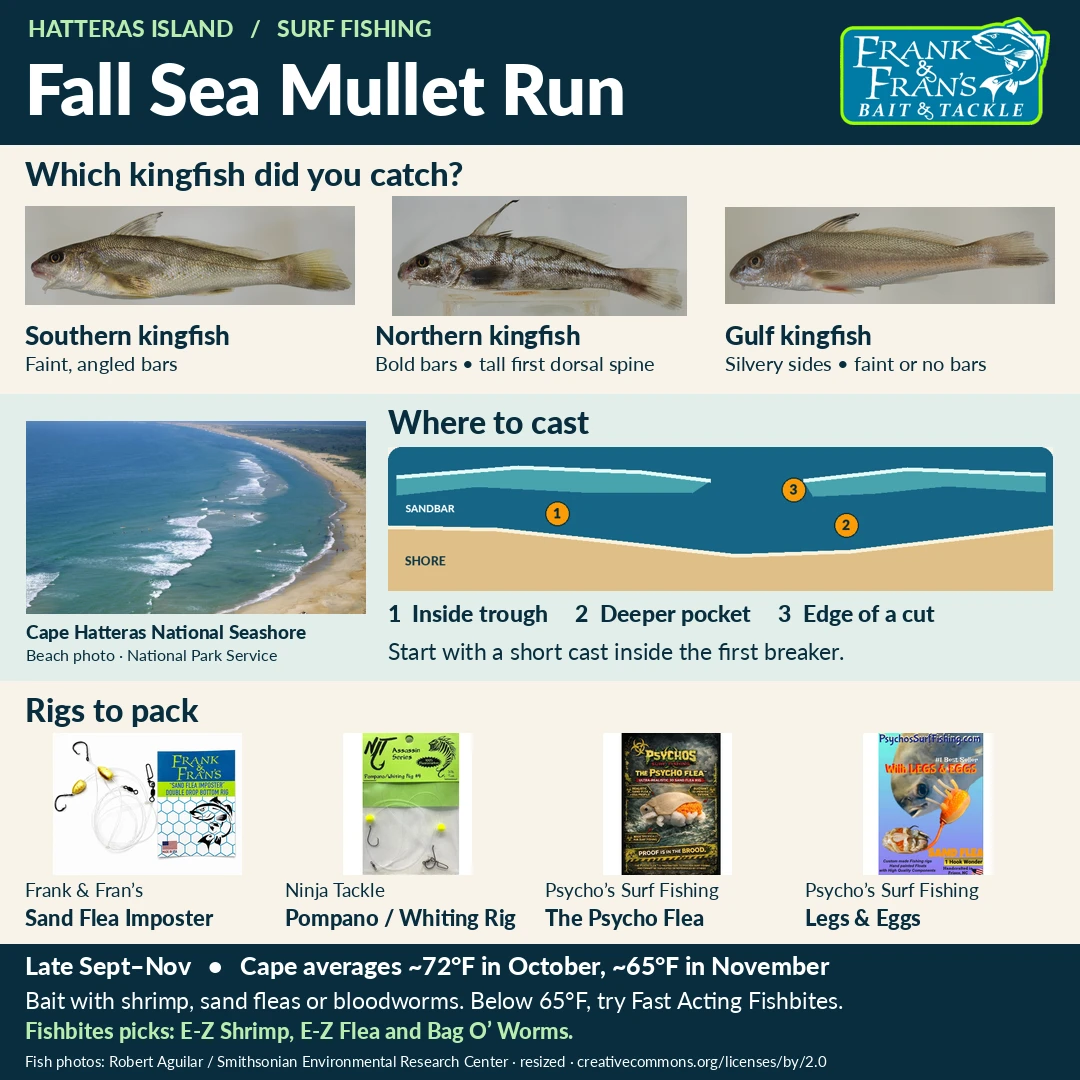
Sea mullet, whiting, kingfish and Virginia mullet are local names for small bottom-feeding fish in the drum family. They have a small, downward-facing mouth and a single chin barbel. The finger mullet we sell for cut bait are a different fish. North Carolina has three kingfish species, and color can vary, so look at the markings and first dorsal fin together. See the NC Division of Marine Fisheries kingfish profile and Carolina Sportsman’s identification guide.
- Southern kingfish (Menticirrhus americanus) usually has dusky, brownish or bronze diagonal bars. It’s the most abundant of the three statewide.
- Northern kingfish (Menticirrhus saxatilis) usually has darker, bolder side markings and a long first dorsal spine.
- Gulf kingfish (Menticirrhus littoralis) usually looks more uniformly silver, with faint or indistinct bars. It favors sandy surf and is common south of Cape Hatteras. NC Division of Marine Fisheries stock update
When do sea mullet show up in the fall?
Start watching the reports in late September and keep a whiting rig handy through November. These fish can already be around before fall, and their numbers vary by beach and day. In 2026, we reported sea mullet in the mix on September 30, on the ocean beaches at Avon and Buxton on October 12, and up and down the beach on November 7. On November 8, Michael “Mullet Man” Creech checked in with a good haul. Our November 19, 2025 report also had sea mullet and puppy drum along the beach and highlighted sand flea imitation rigs. September reports · October reports · November reports and original Facebook post links
What water temperature should you look for? Cape Hatteras sea-surface averages give you some context: roughly 78°F in September, 72°F in October and 65°F in November. Those are regional monthly averages, and the water on the beach you’re fishing can differ. There’s no single fall arrival temperature for all three kingfish. For a day on the beach, use the latest ocean-side water reading to choose a bait formula and the latest fishing report to see where fish have been caught. Cape Hatteras monthly water temperature data · Latest OBX fishing report
What sea mullet eat and what to use for bait
Kingfish pick up sand fleas (mole crabs), other small crustaceans, shrimp and marine worms along the bottom. Look for sand fleas in the wash as a wave recedes, especially where you see little V-shaped ripples or dimples. A fresh sand flea is a good first choice when they’re around. A small piece of peeled fresh shrimp is our easy starting bait just about anywhere, and bloodworms are well worth trying when shrimp goes untouched. Use a small piece and leave the hook point and gap clear. Our guide to finding OBX sand fleas
- Fishbites E-Z Shrimp. Fish a small strip by itself or tip a piece of fresh shrimp. Reach for Fast Acting as the surf cools and Longer Lasting when you want more hold. Shop Longer Lasting E-Z Shrimp
- Fishbites E-Z Flea Longer Lasting. The orange-and-white sand flea strip is a good option when mole crabs are in the wash or when you can’t find enough real fleas. Try it on a bare bottom rig or a sand flea imitation rig. Shop E-Z Flea
- Fishbites Bag O’ Worms Bloodworm. Try a short strip on the second hook while you fish fresh shrimp on the first. It’s available in Fast Acting and Longer Lasting. Shop Fast Acting Bloodworm · Shop Longer Lasting Bloodworm
Fishbites recommends Fast Acting for cooler water, especially below 65°F. Longer Lasting uses a mesh binder for extra hold and is useful in warmer surf or when bait stealers are busy. Change one bait at a time so you can tell what’s getting hit. Fishbites formula guide
Which rigs should you fish?
- Frank & Fran’s Sand Flea Imposter. This is our first pick when you want to compare two baits. Choose the Sand Flea Imposter version of our double-drop bottom rig. Try fresh shrimp tipped with Fishbites on one hook and a sand flea or bloodworm on the other. Shop the F&F Sand Flea Imposter
- Psycho’s Surf Fishing The Psycho Flea. This buoyant 3D sand flea imitation gives you a flea profile just off bottom. Try a small piece of fresh shrimp or E-Z Flea on the hook and see how the fish respond in the inside trough. Shop The Psycho Flea
- Psycho’s Surf Fishing Sand Flea with Legs & Eggs. This single-hook rig uses a flea-shaped float with orange legs and an egg sac. Try a small shrimp piece or a bloodworm strip along the edge of a pocket. Our November 19, 2025 report singled it out among the sand flea mimics worth packing. Shop Legs & Eggs · Manufacturer’s rig details
- Ninja Tackle Pompano / Whiting Rig. Start with a size 4 hook and a small piece of fresh shrimp, sand flea or Fishbites. Try the Naked version for a simple bait presentation or the Orange Bead version when you want a touch of color. Shop the Ninja Tackle Pompano / Whiting Rig
One more setup from the local reports: on November 18, 2025, Jim Price of Psycho’s Surf Fishing found sea mullet at Ramp 34 on Adam’s Black Drum Rig baited with bloodworms. That’s a combination to remember if you’re already carrying the rig and the flea or shrimp bite is slow. Frank & Fran’s Facebook report archive
Where to cast for sea mullet on a Hatteras beach
- Start in the inside trough (slough). Look between the shore wash and the first line of breakers for a strip of darker, smoother water. A short cast can get the bait into the trough while a long cast sails right over it.
- Work the shoulder of a bowl or pocket. Where that trough widens or deepens, cast to the edge where shallower sand slopes into the pocket. Try both shoulders if you only get bites on one stretch.
- Try the edge of a cut in the bar. Look for a gap in the line of whitewater. Fish the side of the opening where the current meets the trough. If your sinker keeps rolling down the beach, shift to the softer edge or use a sinker that holds in the current within your rig and rod ratings.
Pick a stretch where you can see the surf structure. Try the short cast first, then cast a little farther or walk to the next pocket if you’re feeding crabs without getting a tap. The same access can fish differently after a blow, so read the beach each time you go. Our guide to reading a Hatteras Island beach
Before you head out, check our Outer Banks fishing report or stop by Frank & Fran’s in Avon and tell us where you’re planning to fish. We’ll help you pick a bait and rig for the surf you’ve got that day. Shop sea mullet rigs and bait · Read our year-round sea mullet guide