
Sand Fleas for Surf Fishing: How to Find, Collect, and Use Them on the OBX
Posted by Heather James on 13th Jul 2026
Grab a rake to find sand fleas & learn how to hook them to catch more pompano, sea mullet and drum!
If pompano, sea mullet, and puppy drum had a favorite meal on the Outer Banks, it would be sand fleas. These small, burrowing crustaceans live by the millions in the wet sand of Hatteras Island beaches, and the fish you most want to catch are eating them every single day.
The good news for surf anglers: sand fleas are free, abundant, and one of the deadliest baits you can put on a hook. The trick is knowing where to find them, how to catch them, and how to fish them right.
This guide covers all of it, plus what to do when you'd rather skip the digging and head straight to the water.
What Are Sand Fleas?
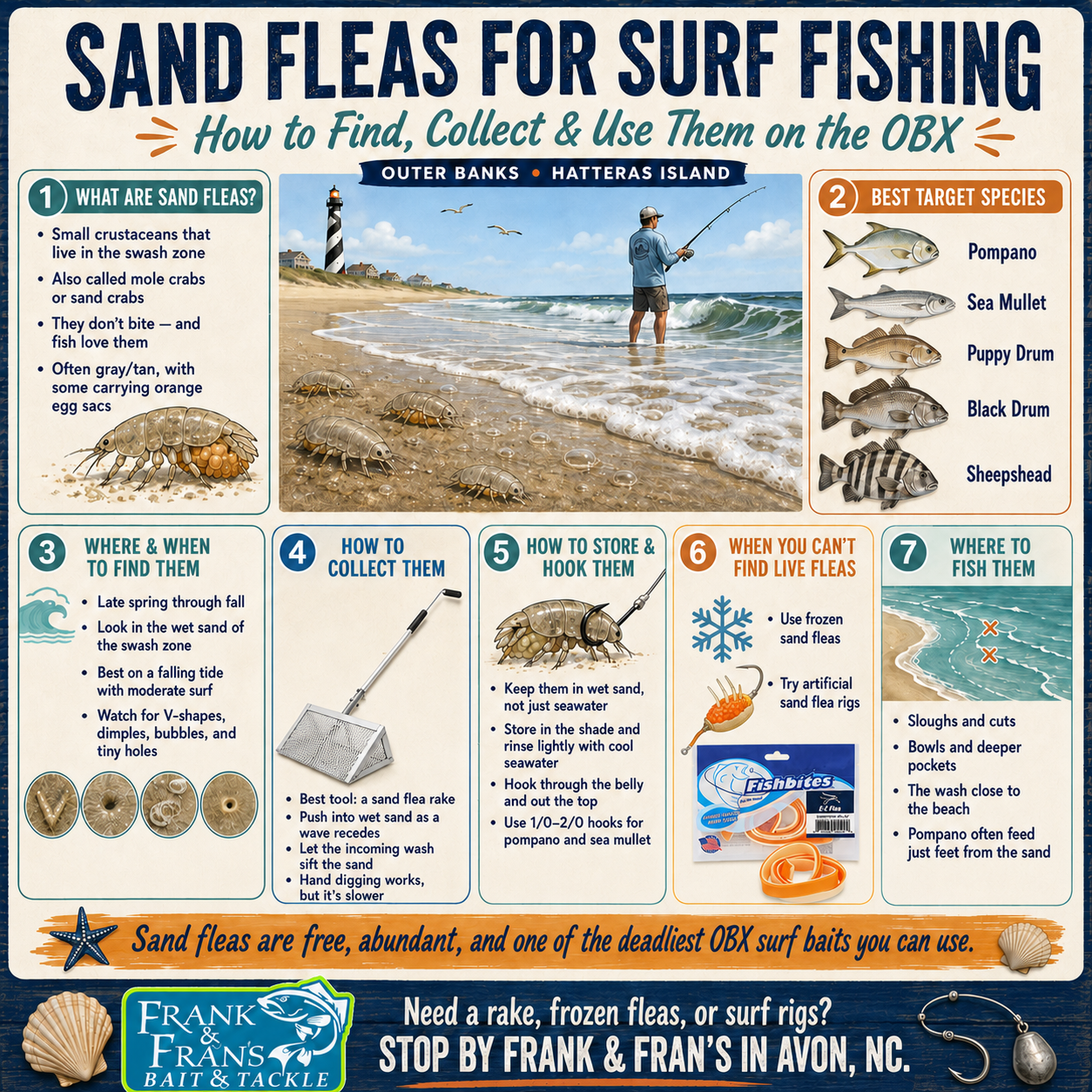
Sand fleas (also called mole crabs or sand crabs) are small, oval-shaped crustaceans that live in the swash zone. That's the strip of beach where waves wash up and recede. Sand fleas burrow tail-first into the wet sand and filter-feed from receding water using small antennae.
They aren't actually fleas, and they don't bite. They look like tiny gray-to-tan armored eggs about the size of an almond. Some carry bright orange egg sacs that fish find especially attractive.
To OBX surf species, sand fleas are a primary food source. Matching what fish are already eating is one of the most reliable rules in fishing, and that's why sand fleas outproduce store-bought bait under the right conditions.
What Fish Eat Sand Fleas on Hatteras Island?
Sand fleas are the go-to bait for several of the most popular surf species along the Outer Banks:
- Pompano. The classic sand flea target, especially from June through early fall.
- Sea mullet (whiting). Abundant in spring and summer.
- Red drum (puppy drum). Both small and slot-sized fish eat fleas readily.
- Black drum. Heavy feeders on crustaceans.
- Sheepshead. Picky eaters that rarely turn down a sand flea around structure.
If you're surf fishing on Hatteras Island in the warmer months, sand fleas should be on your hook at least part of the time.
When and Where to Find Sand Fleas on the OBX
Sand fleas are around along Hatteras Island beaches from late spring through fall. They're most abundant when the water is warm and the surf is moderate.
How to Spot Them
Walk the swash zone (the wet sand between the surf and dry beach) and watch the surface as a wave recedes. Here's what you're looking for:
- Small V-shapes or dimples in the wet sand as the water pulls back. Those are sand flea antennae filter-feeding.
- Bubbles or tiny holes appearing in groups in the wet sand.
- A swirling, almost shimmering quality to the wet sand where a colony is feeding just below the surface.
Sand fleas cluster. If you find one, there are usually dozens or hundreds within a few feet.
Best Conditions
Sand fleas are easier to find on a falling tide, when more of the swash zone is exposed and the sand they live in stays shallowly covered. A moderate surf brings in food and keeps colonies active. Calm, glassy days or extremely rough surf can both make them harder to locate.
How to Catch Sand Fleas
The Sand Flea Rake (the Right Tool)
A sand flea rake is basically a wide basket on a long handle. You push it into the wet sand at an angle, let waves wash sand through the basket, and the fleas stay behind. It's the fastest, easiest, and most efficient method by a wide margin.
Frank & Fran's stocks several solid options:
- Fish-N-Mate 167 Large Sand Flea Rake. Anodized aluminum for saltwater durability, with a wide 15-inch basket for fast collection.
- Tsunami Sand Flea Rake. Lightweight and durable. A good pick for anglers who want a simple, dependable rake.
- Sea Striker Sand Flea Rake. Curved handle and padded grips that cut down on back strain during longer collection sessions.
How to Rake Effectively
- Find a productive stretch. Look for the dimples, bubbles, or V-shapes mentioned above.
- Wait for a wave to recede. The fleas are most exposed as the wash pulls back.
- Push the rake into the wet sand at a slight angle, then drag it toward you as the next wave comes in.
- Let the incoming wash sift the sand through the basket. Lift, dump the fleas into a bucket, and repeat.
You can fill a bucket in less than 30 minutes when conditions are right.
Hand Digging
No rake? You can still hand-dig. Scoop wet sand from the swash zone where you see the V-shapes and sift through it with your fingers. It works, but it's slow and rough on your hands. A rake pays for itself fast.
How to Store Sand Fleas
Keep sand fleas alive and fresh by:
- Storing them in a bucket with a few inches of wet sand from the beach, not just seawater
- Keeping them in the shade, out of direct sun
- Rinsing them lightly with cool seawater every hour or so on hot days
Live, lively fleas catch more fish than dead, mushy ones. If you have extras at the end of the day, freeze them in a sealed bag for future trips.
How to Hook a Sand Flea
Sand fleas have a soft, vulnerable belly and a harder shell on the back. Standard method:
- Find the V-shaped antennae end. That's the head. The opposite end is where the legs and the small "tail" (sometimes with orange eggs) sit.
- Push the hook through the bottom of the flea, coming out the top near the back.
- Leave the hook point exposed for a clean hookset.
A small wire or J-hook in the 1/0 to 2/0 range works well for most pompano and mullet setups. Pre-tied pompano and whiting rigs make this even easier. The right hook size and spacing are already dialed in.
For drum-class fish, larger circle hooks on a drum slider rig with one or two larger fleas can be deadly.
When You Can't Find Live Sand Fleas
Some days the fleas just aren't there, or the surf is too rough to safely collect them. That's when alternatives come in.
Frozen sand fleas. Frank & Fran's carries frozen sand fleas when fresh ones aren't available locally. Frozen fleas, thawed and rigged properly, still produce.
Artificial sand flea rigs. Pre-tied rigs designed to imitate the look and movement of sand fleas have become some of the most effective options on the Hatteras beach. Local favorites include:
- Frank & Fran's Sand Flea Imposter
- Psycho's Sand Flea Surf Fishing Rig. Hand-tied in Frisco, NC. Bright sand flea imitations that draw strikes in clear or stained water.
- Psycho's PHAT Sand Flea with Eggs. A larger profile for when fish are looking for a bigger meal.
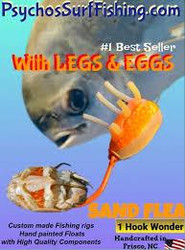
- Psycho's Soft Sand Flea with Legs and Eggs. A soft-bodied option with adjustable float positioning.
Fishbites. Fishbites E-Z Flea strips give off scent in the water column and stay on the hook far longer than natural bait. A small piece of Fishbites paired with a real or artificial sand flea is one of the most effective combinations on Hatteras Island.
Browse the full selection of artificial sand flea options and surf rigs to round out your tackle bag.
Where to Fish Sand Fleas on Hatteras Island
Sand flea bait works wherever the fish that eat them are feeding. Focus on:
- Sloughs and cuts in the surf
- Bowls and deeper pockets close to the beach
- The wash itself, where sand fleas naturally live. Pompano often hunt within a few feet of the sand
Light tackle, a small piece of fresh sand flea, and a clean slough adds up to one of the best ways to spend a Hatteras Island summer afternoon.
Stop In Before You Head to the Beach
Frank & Fran's has been outfitting Hatteras Island anglers since 1988. The staff knows what's biting, where the fleas are running, and which rigs are matching local conditions on any given day.
Stop into the shop in Avon for a rake, frozen fleas if you need them, the right pre-tied rigs, and a quick rundown of where to point your truck before you hit the sand. Or browse the surf fishing tackle selection online to stock up before your trip.
Sand fleas are nature's perfect Outer Banks bait. Free, abundant, and exactly what the fish are already looking for. Grab a rake, fill a bucket, and find out for yourself.