How to Read a Hatteras Island Beach: Finding Sloughs, Cuts, and Feeding Zones
Posted by Frank & Fran's Crew on 28th Jun 2026
How to Read a Hatteras Island Beach: Finding Sloughs, Cuts, and Feeding Zones
The most important skill in surf fishing on Hatteras Island has nothing to do with how far you can cast or how much gear you own. It's learning to read the beach. That means recognizing the subtle features in the sand and water that tell you exactly where fish are feeding.
Sandbars shift constantly out here. The beach you fished last summer isn't the same beach today. Anglers who know what to look for can walk onto an unfamiliar stretch of sand, read the water in a few minutes, and put their bait exactly where the fish are.
This guide breaks down what to look for, when to look for it, and how to put your rigs in the right water.
Why Reading the Beach Matters on Hatteras Island
Hatteras Island has more than 50 miles of open Atlantic shoreline. Almost all of it looks fishable. But the fish you're after, red drum, pompano, sea mullet, bluefish, Spanish mackerel, all of them feed in very specific places. They hunt in:
- Deeper holes and troughs where current funnels bait
- Cuts between sandbars where wash and food get pushed back toward the beach
- Points where sandbars curve and create current edges
- Wash zones where waves stir up sand fleas and crabs
Casting blind into featureless surf is a slow way to find fish. Casting into a clear slough or cut is how locals consistently land them. Good news: with a little practice, anyone can learn to spot these features.
Key Features to Look For
Sloughs (Also Called Troughs)
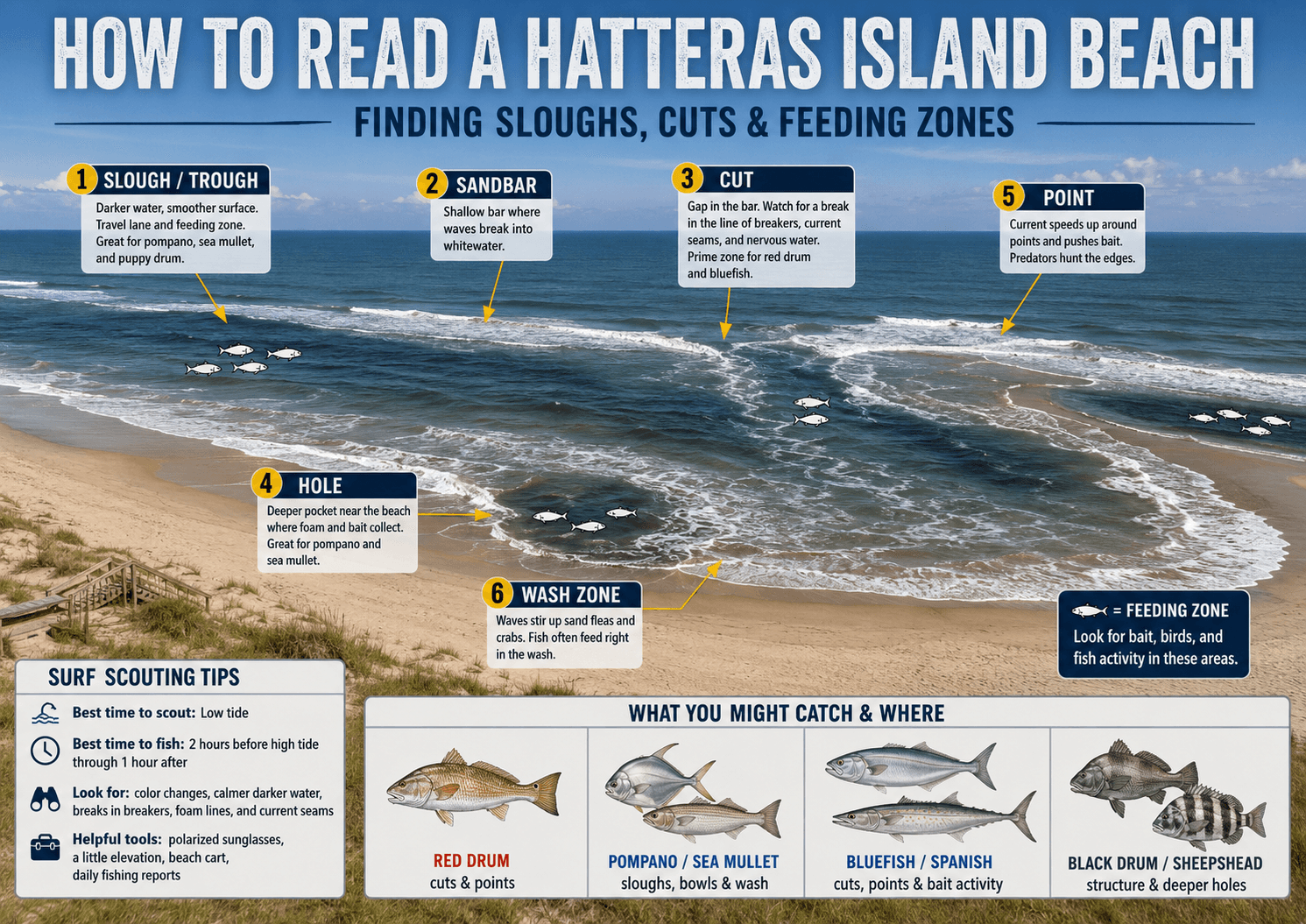
A slough is a deeper channel of water running parallel to the beach, usually between the shoreline and the first sandbar. Fish use sloughs as travel lanes and feeding zones, especially on a rising tide.
How to spot one:
- Color change. Sloughs look darker than the surrounding water because they're deeper. Look for a darker band running roughly parallel to the beach.
- Wave behavior. Waves often roll smoothly over a slough rather than breaking. Whitewater breaks over the shallow bar just beyond it.
- Calm water inside a band of surf. A strip of calmer, deeper-looking water between two lines of breaking waves is almost always a slough.
A pre-tied bottom rig like the F&F Double Drop, cast just past the sandbar and pulled back into the slough, drops your bait exactly where pompano, sea mullet, and puppy drum cruise looking for food.
Cuts (Gaps in the Sandbar)
A cut is a low spot or gap in the offshore sandbar where water rushes back out to sea. Cuts create a constant flow of food, structure, and current. That's exactly what predatory fish want.
How to spot one:
- Breaks in the line of breakers. Waves break across the top of a sandbar. Where they stop breaking, the bar is deeper or gone entirely. That's your cut.
- Outflowing current. Water that washed over the bar has to go somewhere. It funnels back through the cut, often creating choppy or "nervous" water on the seaward side.
- Foam and debris lines. Foam and sea grass tend to line up along the edges of a cut, marking the current seam.
Cuts are some of the most reliable producers on Hatteras Island, especially for red drum and bluefish staging on the seaward side waiting for an easy meal.
Holes
A hole is a deeper pocket carved into the beach, often right in the wash.
How to spot a hole:
- A curve in the shoreline where the sand bends inward
- A darker patch of water close to the beach that looks noticeably deeper than the surrounding wash
- Sea foam or floating bait collecting in one spot. It's sitting in a low area for a reason
Pompano and sea mullet love bowls. The waves trap sand fleas and other crustaceans right there in the wash.
Points
Where a sandbar curves out toward the ocean, or where the beach itself juts out a little, current speeds up. Fast water moves bait, and bait brings predators.
Cape Point in Buxton is the most famous example in the country, but smaller versions of this same feature exist all along the island. Look for any spot where the shoreline or sandbars bend.
When to Read the Beach
The best time to scout is at low tide, when sandbars are exposed and depth changes are obvious. Walk the beach. Note where the bars are, where the cuts open up, where deeper water sits closest to shore.
Then come back to fish two hours before high tide through the first hour after. That's when rising water pushes bait into the sloughs and predators move in behind it.
When you fish a slough or cut you already scouted at low tide, you're casting into a feature instead of into open water. That's how locals fish.
Tools That Help You Read the Beach Better
Polarized sunglasses. The single most useful piece of gear for reading the surf. They cut surface glare so you can actually see depth changes, sandbars, and structure. Polarized does not mean expensive, we have polarized glasses from $19.99 to $350 to fit all budgets
Elevation. A small dune, the deck of Avon Pier, or the tailgate of a beach-driven truck gives you enough height to spot features that disappear at sand level.
A beach cart. When the bite is in a specific slough a mile down the beach, you need to move. A durable beach cart makes it realistic to walk to the right water with rods, bait, and a cooler. Without one, most anglers end up fishing where it's easy rather than where the fish are.
Daily fishing reports. Local anglers update where fish are biting almost every day during the season. The Frank & Fran's fishing report is one of the best resources for pairing your beach reading with what's actually happening on the water.
How Beach Reading Changes by Species
Red drum prefer cuts and the edges of points where current pushes bait. Heavier bottom rigs with mullet, bunker, or cut bait are the classic Hatteras setup. Local drum rigs are tied for these exact conditions.
Pompano and sea mullet key on sloughs, bowls, and the wash itself. Light bottom rigs with sand fleas, Fishbites, or fresh shrimp are deadly. A pompano and whiting rig cast into a clean slough is tough to beat. Note: in the summer, the larger pompano are out past the second sand bar.
Bluefish and Spanish mackerel are surface and column feeders. They show up along cuts, points, and anywhere bait is getting herded. Look for diving birds, then cast metal lures past the bait.
Black drum and sheepshead hunt structure. Pier pilings and deeper holes are where you want to be.
Final Thoughts
Reading the beach is a skill that gets better every time you walk a stretch of Hatteras Island shoreline. The more you watch the water, the more obvious the features become. Within a few trips, what looked like open surf starts reading like a map of where the fish are.
At Frank & Fran's, the staff fishes these beaches regularly. We can help you match what you're seeing in the water to the right rig, bait, and bottom setup. Stop in the shop in Avon, check the daily fishing report before you head out, and start putting your bait where the fish actually are.
Sandbars shift. Cuts open and close. But the fish always go to the food, and now you know how to find it.