What's Biting on Hatteras Island in September & October?
Posted by Stephanie Bayne on 16th Aug 2026
What Can You Catch Surf Fishing on Hatteras Island in September & October?
September and October are two of the best months to surf fish on Hatteras Island. Summer crowds begin to thin, water temperatures start dropping, bait begins moving along the beach, and some of the Outer Banks' most popular gamefish become increasingly active.
From bluefish and pompano to big red drum, black drum, sea mullet and speckled trout, fall can produce an incredible variety of fish from the beach.
So, what can you catch surf fishing on Hatteras Island in September and October?
Quite a lot.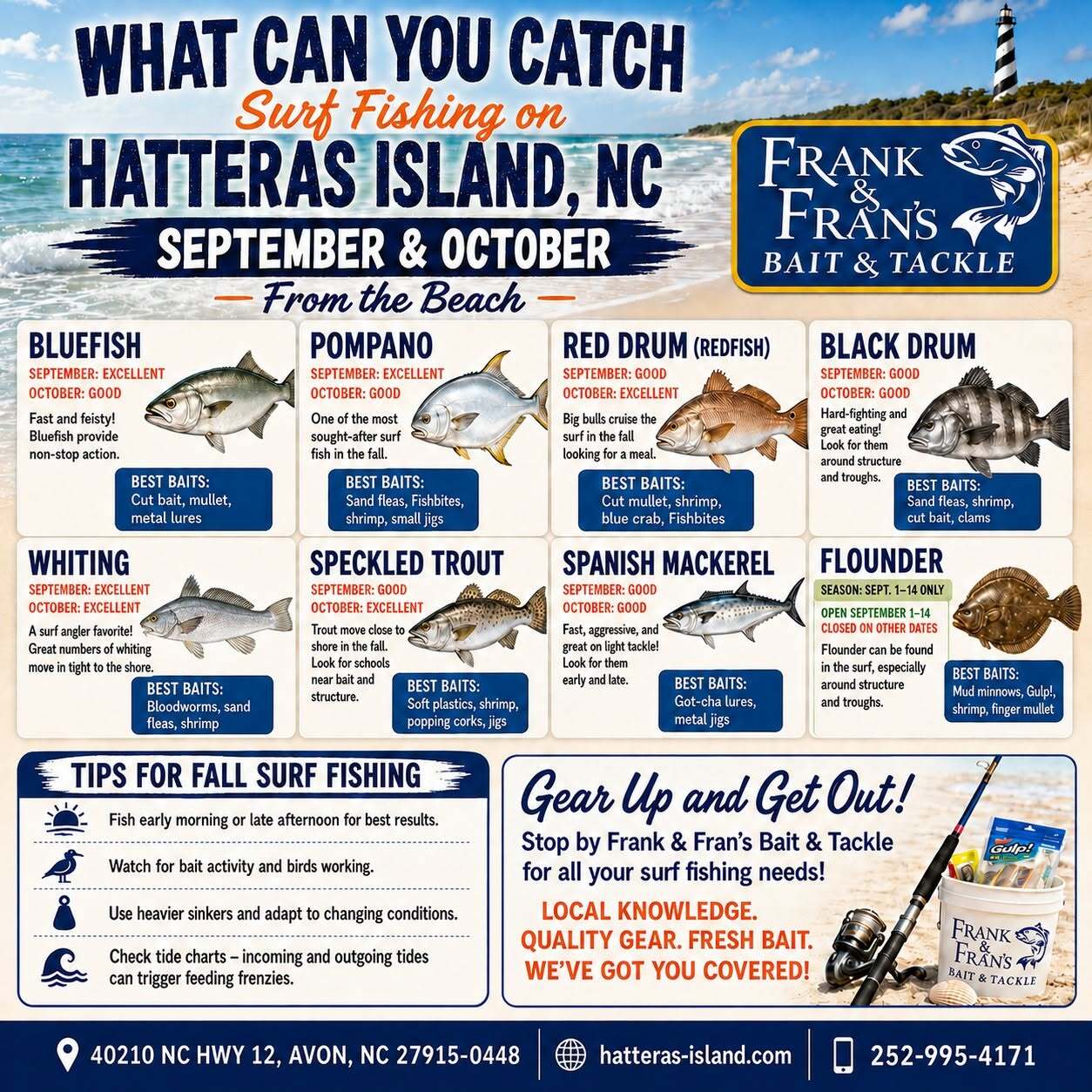
The exact bite changes with water temperature, wind, tide, bait movement and beach structure, but these eight species should be on every fall surf angler's radar.
Bluefish
September: Excellent | October: Good
Bluefish are one of the most dependable fall targets on Hatteras Island. They can range from smaller fish providing constant action on light tackle to much larger blues capable of making short work of light leader material.
When bluefish are feeding on baitfish near the surface, casting metal, plugs and other fast-moving lures lets you cover a lot of water. When the fish are cruising deeper, cut mullet or other cut bait fished on a float-style bluefish rig can be extremely effective.
Look for diving birds, bait spraying from the water and sudden surface activity. If you find actively feeding bluefish, fishing can go from quiet to wide open very quickly.
Best baits and lures: cut mullet, cut bait, metal lures and plugs.
Shop the bluefish setup: Sea Striker FBS3-Y Bluefish Float Rig or cast a GOT-CHA Plug 100 Series when the fish are chasing bait. Both are designed for the kind of bluefish fishing common around the Outer Banks.
Pompano
September: Excellent | October: Good
Pompano are one of the most sought-after fish in the Hatteras surf, and September can provide excellent opportunities.
Don't automatically make the longest cast you can. Pompano regularly feed surprisingly close to shore, especially around the wash, cuts, shallow sloughs and areas holding sand fleas.
Small baits generally work best. Fresh sand fleas are difficult to beat, but shrimp and Fishbites are also excellent choices. Small hooks and compact surf rigs help keep the presentation natural.
A good strategy is to fish different distances until you locate the feeding zone. Put one bait close to the beach and another farther into the slough rather than assuming the fish are always beyond the breakers.
Best baits: sand fleas, Fishbites and small pieces of shrimp.
Shop the pompano setup: Try the F&F Double Drop Bottom Rig and select the Sand Flea Imposter option, or fish a Psycho's Sand Flea with Legs & Eggs. Frank & Fran's Sand Flea Imposter is one of the locally recommended setups for pompano fishing.
Red Drum
September: Good | October: Excellent
If there is one fish that defines fall surf fishing on Hatteras Island, it may be the red drum.
Puppy drum and slot-size fish can show up along much of the island, while larger drum become a major target as fall progresses. October is particularly exciting because cooling water and moving bait can put some very large red drum within casting distance of the beach.
For puppy drum and smaller fish, shrimp, mullet and cut bait can all produce on bottom rigs. When specifically targeting larger drum, a single larger bait presented on a fish-finder or drum-slider style rig is a Hatteras Island standard.
Don't assume you need to cast over the horizon. Drum frequently use sloughs, troughs and cuts running parallel to the beach.
Best baits: fresh or cut mullet, shrimp, cut bait and blue crab.
Shop the red drum setup: For larger baits, use an F&F Circle Hook Drum Slider Rig. For puppy drum and general bottom fishing, the F&F Double Drop Bottom Rig is available in options including Nude Dude and Buck Naked.
Black Drum
September: Good | October: Good
Black drum don't always get as much attention as their red cousins, but they are an excellent Hatteras Island surf target.
These fish spend much of their time feeding near the bottom and are particularly fond of crustaceans and shellfish. Sand fleas and shrimp are excellent choices, with clams and other natural baits also producing.
Concentrate on deeper sloughs, troughs, cuts and areas around structure. A relatively simple bottom presentation is often all that is necessary.
Black drum can also get surprisingly large, so don't assume every bite on a small piece of shrimp is coming from a small fish.
Best baits: sand fleas, shrimp, clams and cut bait.
Shop the black drum setup: Psycho's Surf Fishing Adam's Black Drum Rig is specifically designed for targeting black drum around OBX sandbars, troughs and structure. Another option is Psycho's Sand Flea with Legs & Eggs, which can be used for black drum as well as pompano, sea mullet and red drum.
Whiting / Sea Mullet
September: Excellent | October: Excellent
On Hatteras Island, you'll hear these fish called sea mullet at least as often as you'll hear them called whiting.
Whatever you call them, they are one of our favorite surf fish.
Sea mullet feed along the bottom and frequently move very close to shore. Some of the best fishing can occur in the first slough or trough rather than at the end of your longest cast.
Fresh shrimp, bloodworms, sand fleas and Fishbites are all proven baits. Use relatively small pieces of bait—you don't need a huge offering to catch a quality sea mullet.
A two-hook bottom rig is ideal because it allows you to experiment with two baits at the same time.
Best baits: bloodworms, fresh shrimp, sand fleas and Fishbites.
Shop the sea mullet setup: The F&F Double Drop Bottom Rig is a versatile choice for sea mullet fishing, while the Ninja Tackle LIL SCOTTY #2 Rig gives anglers another double-drop option designed for coastal bottom fishing.
Speckled Trout
September: Good | October: Excellent
Speckled trout become increasingly interesting as the water cools in the fall.
Most anglers associate Hatteras Island trout fishing with the Pamlico Sound, but trout can also move into areas accessible from the ocean side when conditions are right. Wherever you fish them, concentrate on moving water, structure and concentrations of bait.
Soft plastics and shrimp imitations are excellent choices. Popping corks are especially effective when fishing the sound because they allow you to suspend a bait while creating noise and surface disturbance that can draw fish from a distance.
Don't stay in one place all day if you're throwing artificials. Trout fishing is often about finding the fish rather than waiting for them to eventually find you.
Best baits and lures: soft plastics, shrimp imitations, jigheads and popping corks.
Shop the speckled trout setup: Pair a Four Horsemen Tackle Popping Cork with a shrimp imitation such as Berkley Gulp! Alive! Saltwater Shrimp. Both are well suited to inshore red drum and speckled trout presentations.
Spanish Mackerel
September: Good | October: Good
Spanish mackerel are built to chase bait, which means mobility and speed are usually more important than soaking bait on the bottom.
Watch the water.
Birds working, baitfish jumping and flashes of fish near the surface are all signs that Spanish may be nearby. Early morning and late afternoon are often good times to look for activity.
From the beach or pier, long-casting metal lures and GOT-CHA plugs allow you to cover water quickly. Cast beyond the activity when possible and work the lure rapidly through the feeding zone.
Spanish have excellent eyesight and plenty of speed, so don't be afraid to retrieve faster than you think you should.
Best lures: GOT-CHA plugs and metal casting lures.
Shop the Spanish mackerel setup: The GOT-CHA Plug 100 Series is a compact lure suited to Spanish mackerel and bluefish, while the larger GOT-CHA Plug 200 Series is another classic option for chasing fast-moving saltwater predators.
Flounder
2026 Recreational Harvest Season: September 1–14
Flounder can be caught around Hatteras Island from the surf, sound, inlets and areas with good bottom structure.
Unlike fish that continuously cruise the beach, flounder are ambush predators. Focus on places where they can lie in wait for bait: drop-offs, troughs, cuts, channel edges and transitions in bottom structure.
Slow-moving presentations work well. Soft-plastic shrimp, Gulp!, minnows and finger mullet are all productive choices.
For 2026, North Carolina's recreational flounder harvest season opens at 12:01 a.m. September 1 and closes at 11:59 p.m. September 14. The state lists a one-fish-per-person-per-day limit and 15-inch minimum total length, and harvested flounder must be reported. Always check the current N.C. Division of Marine Fisheries regulations before fishing because regulations can change.
Best baits and lures: mud minnows, finger mullet, shrimp and Gulp!-style soft plastics.
Shop the flounder setup: Berkley Gulp! Alive! Saltwater Shrimp is suited to flounder, trout and redfish, while the Z-Man PrawnstarZ 3.5" Shrimp provides another shrimp-style artificial for flounder and other inshore predators.
How to Find Fish on the Hatteras Island Beach
Knowing which species are around is only half the battle.
One of the most common questions we hear at Frank & Fran's is:
"Where should I fish today?"
A better way to approach the question is to first look at the tide, wind, waves, bait activity and structure of the beach in front of you.
Look for sloughs running parallel to shore, cuts through sandbars, points, deeper troughs and places where waves break differently than the surrounding beach. These features concentrate current and food—and fish often follow.
Watch for birds. Watch for bait. Pay attention to where waves stop breaking and where water appears deeper.
And don't overlook the water right in front of you. Pompano, sea mullet, black drum and puppy drum can all feed much closer to shore than many anglers realize.
Best Time to Surf Fish Hatteras Island in the Fall
Early morning and late afternoon are excellent starting points, but don't let the clock decide whether you go fishing.
Tides, wind and changing weather can turn the bite on at almost any point during the day.
Incoming and outgoing water moving across good structure can both produce fish. Rather than waiting for one supposedly perfect tide, learn to recognize how the water is moving across the beach you're fishing.
The best time to fish is when you have time to fish.
Get the Latest Hatteras Island Fishing Report
Fall conditions can change quickly. A beach that was producing sea mullet yesterday may have bluefish working it today, while a shift in wind could make the Pamlico Sound a better option tomorrow.
Before heading out, check the Frank & Fran's Hatteras Island Fishing Report for the latest information on what's biting, where anglers are catching fish and which baits and rigs are working.
Need tackle for the trip? Browse our Fishing Rigs & Beads or stop by Frank & Fran's Bait & Tackle in Avon, NC and we'll help you match your rig, bait and sinker to the fish and conditions you're facing.
Fishing Hatteras Island this September or October?
Gear up, get out, read the beach—and see what shows up on the end of your line.