How Tides Affect Surf Fishing on the Outer Banks (and How to Use Them)
Posted by Heather James on 26th Aug 2026
How Tides Affect Surf Fishing on the Outer Banks (and How to Use Them)
Ask the most experienced angler on the beach what matters more, time of day or the tide, and almost every one of them will say the tide. Time of day plays a role. Wind matters. Water clarity matters. But moving water is the single biggest factor in when fish feed in the surf.
If you've ever shown up at the beach with great gear, perfect weather, and zero bites, the tide is usually the culprit. Knowing how to read it and how to time your fishing around it is one of the fastest ways to improve your results on Hatteras Island.
This guide walks through what tides are, how they shape the surf, and how to use them to put more fish on the sand.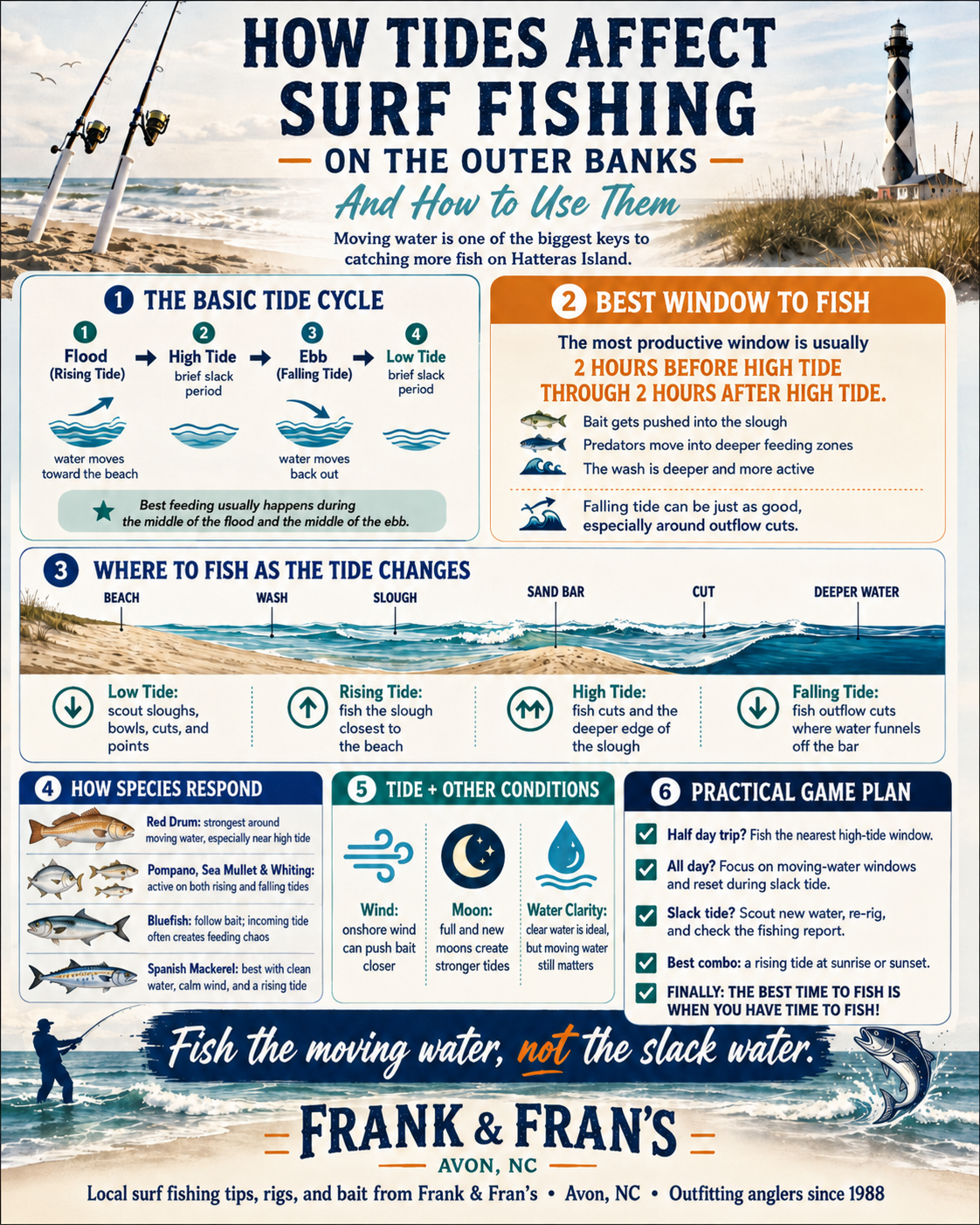
Why Tides Matter So Much
Fish feed when bait is moving, and bait moves on the tide. The surf zone is essentially one big conveyor belt of food, and the tide is what runs the belt.
When water rises:
- It pushes baitfish, sand fleas, and crabs out of the sand and into the wash
- It floods sloughs and bowls that were dry or shallow at low tide
- It carries scent further down the beach
- It gives predators access to feeding zones they couldn't reach an hour earlier
When the water falls:
- Bait gets concentrated in the deeper troughs and outflow cuts
- Currents pick up speed as water funnels off the bar
- Predators stage at the edges of cuts waiting for the conveyor to deliver
Both work. Neither has a strong bite during slack water in the middle.
The Basic Tide Cycle
On the Outer Banks, you get two high tides and two low tides every day, roughly six hours apart. Each cycle has four phases:
- Flood (rising) tide. Water moving in toward the beach.
- High tide. The peak. Brief slack period.
- Ebb (falling) tide. Water moving back out to sea.
- Low tide. The bottom. Another brief slack period.
The strongest feeding usually happens during the middle of the flood and the middle of the ebb, when current is strongest. Slack tide is usually the slowest fishing of the cycle. Bait stops moving, predators stop hunting, and you stop catching.
Tide tables are easy to find online or in any tide app. We like to use Tides Near Me. Check the day before you fish and plan your trip around the moving water windows. You can also pick up a free tide chart at Frank & Fran's.
The Best Tide for Surf Fishing on Hatteras Island
For most species, the two hours before high tide through two hours after high tide is the most productive window. Here's why:
- Bait is being pushed off the bar and into the slough
- Predators move into the slough to feed where they couldn't reach before
- The wash is deeper, which means more sand fleas, crabs, and baitfish active in the swash
- Sloughs hold deeper water, which gives bigger fish enough depth to feel comfortable
That said, falling tide is often just as good for certain species. Pompano, sea mullet, and puppy drum will hit hard on a falling tide when bait gets concentrated in outflow cuts. Drum and bluefish often stage at the seaward edge of cuts during the ebb, picking off the parade of food washing out.
Best advice: fish the moving water, not the slack water. Whether you fish the flood, the ebb, or both depends on your schedule and the species you want. But ultimately you must remember, THE BEST TIME TO FISH IS WHEN YOU HAVE TIME TO FISH!
How Tide Affects the Features You Fish
In an earlier guide we covered how to read a Hatteras Island beach and find sloughs, cuts, and feeding zones. Tide changes how those features fish.
At low tide, walk the beach and scout. Sloughs, cuts, bowls, and points are all visible. Take mental notes (or a picture on your phone) of where the deeper water sits. This is your map.
At rising tide, fish the slough closest to the beach. Bait is being pushed into it, and predators are following.
At high tide, fish the cuts and the seaward edge of the slough where the water is deepest.
At falling tide, fish the outflow cuts. Water leaving the bar funnels through them, and fish stack up where the current is strongest.
At low tide slack, take a break, walk the beach, watch for birds, and reset for the next moving-water window.
A solid beach cart makes it realistic to walk to the right feature when the tide changes. Without one, anglers tend to anchor in one spot and miss the bite when the conditions shift.
How Tide Affects Specific Species
Different species respond to tides differently. Here's how some of the most common Hatteras Island targets play out.
Red Drum
Drum love moving water. The two hours on either side of high tide are usually the strongest window. Cuts and points produce best, especially during spring and fall runs. A pre-tied drum slider rig with fresh cut mullet on a circle hook is the classic setup. Fish the seaward side of a cut on the ebb for staging drum.
Pompano, Sea Mullet, and Whiting
These species feed actively on both rising and falling tides. Pompano especially love the wash itself and the inside of sloughs. A pompano and whiting rig with crab, sand fleas, shrimp or Fishbites will produce throughout the moving-water windows.
Bluefish
Blues are less tide-dependent than bottom species. They follow bait. But moving water tends to concentrate the bait, which concentrates the blues. The first hour of an incoming tide is often a strong window because pushed bait creates feeding chaos. Float rigs with cut mullet, or fast-retrieved metal lures from the artificial bait selection, work well.
Pompano in Summer
Summer pompano are especially keyed on the wash and tend to feed best in the first half of an incoming tide. A small piece of fresh shrimp on a Psycho's Sand Flea Rig, cast just past the wash and worked slowly, is hard to beat.
Spanish Mackerel
Spanish are tide-influenced but mostly key on bait. Early morning rising tides with clean water and calm wind are prime. Fast-retrieved metal lures past the breakers do most of the work.
Tide and Other Conditions
Tide doesn't operate in a vacuum. It plays into a bigger picture with wind, moon, and water clarity.
Wind
Onshore wind (blowing toward the beach) pushes bait closer in and can keep the bite going through slack tide. Hard offshore wind tends to flatten things out and push bait away from the beach.
Moon
Full and new moons produce the strongest tides (called spring tides). Water moves harder and longer. Quarter moons produce weaker tides (called neap tides). For surf fishing, the stronger tides around new and full moons often mean better fishing windows, though they can also blow out conditions in heavy weather.
Water Clarity
Clear water during a strong tide is ideal. Muddy water during a strong tide still produces, but you may want brighter colors on your rigs and lures. The F&F Double Drop Bottom Rig is built with attraction in mind and works well in both conditions.
Practical Tide-Based Game Plans
A few real-world setups for using the tide on Hatteras Island.
"I have a half day. When should I fish?"
Look at the tide table. Pick the closest high-tide window. Fish the two hours before high tide through the first hour after. If high tide is at 8 AM, fish from 6 AM to 9 AM. If it's at 2 PM, fish from 12 PM to 3 PM.
"I'm fishing all day. What's my game plan?"
Fish the two-hour windows around each high tide and each low tide. Take a break or move beaches during slack water. Walk and watch for birds during the slow stretches.
"I'm fishing a multi-day trip. How do I plan?"
Look at the week's tide cycle. The high tides shift later each day. Pick beaches and species based on which tide windows fall during fishable hours. A 5 AM high tide is great if you want quiet beaches and sunrise fish. A 5 PM high tide is great if you want to sleep in and fish the evening bite.
"What do I do during slack tide?"
- Scout new water
- Move to a different beach
- Take a break, eat lunch, drink water
- Check the Frank & Fran's fishing report for updates on where the bite is
- Re-bait, re-rig, retie knots, and inspect your tackle
You don't have to fish every minute. You have to fish the right minutes.
A Few Final Tips
Use a tide app. Apps like Tides Near Me or NOAA's tide predictions are accurate and free. Pin Hatteras Island, Avon, or Cape Hatteras as your home location.
Know the local quirks. Cape Point currents, inlet tides, and pier conditions can vary from the official tide tables. Local knowledge fills in the gaps. Ask at the shop.
Don't ignore slack tide entirely. Fish can still bite during slack water, especially in deeper holes and around structure like pier pilings. But the odds shift in your favor when water is moving.
Combine tide with low-light hours when you can. A rising tide at sunrise or just before sunset is one of the best windows on the beach. Two productive factors stacked.
Be patient on the wrong tide. If you have to fish during slack water for schedule reasons, slow down. Smaller baits, lighter rigs, and a careful presentation can still pick up fish when the conveyor belt is paused.
Stop In Before You Head Out
Frank & Fran's has been outfitting Hatteras Island anglers since 1988. The staff fishes these beaches every day and knows how local tides actually play out across different stretches of the island. Which Avon beaches fish best on a low incoming. When Cape Point lights up on the flood. How Rodanthe and Salvo respond to a strong fall tide.
Stop in the Avon shop for a quick check on where the bite is happening, the right rig for the conditions, and fresh bait. Or browse the full surf fishing rig selection online to stock up before your trip.
The fish are on a schedule. Once you learn it, the beach starts working for you instead of against you. See you on the sand.