Fall Nor'easters and Surf Fishing: How to Fish Before, During, and After a Storm
Posted by Heather James on 19th Oct 2026
Fall Nor'easters and Surf Fishing: How to Fish Before, During, and After a Storm
Fall nor'easters are the biggest wild card in Hatteras Island surf fishing. They can shut the beach down for a week. They can also create the single best drum bite of the year. Reading them, timing them, and fishing them right is one of the skills that separates serious OBX surf anglers from everyone else.
If you've ever planned a trip around a nor'easter window or walked out to a beach the day after a storm and found a brand new slough that produced fish for two weeks straight, you already know what this is about. If you haven't, this guide walks through how to think about these storms and how to put them to work for you.
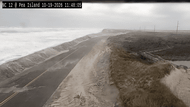
It is October 2026 and as I am writing this, the island is currently under a mandatory visitor evacuation because we may lose our voilatile road once again to a nor'easter. Highway 12 which is our lifeline to the mainland buckled under the intense pounding of a nor'easter late last month and here we are again waiting and watching to see if the road holds. This fall has been particulary bad and three major fishing tournaments were canceled due to extreme conditions. Let's hope the winds die down and the surf calms soon and we can get back to fishing!
What Is a Nor'easter?
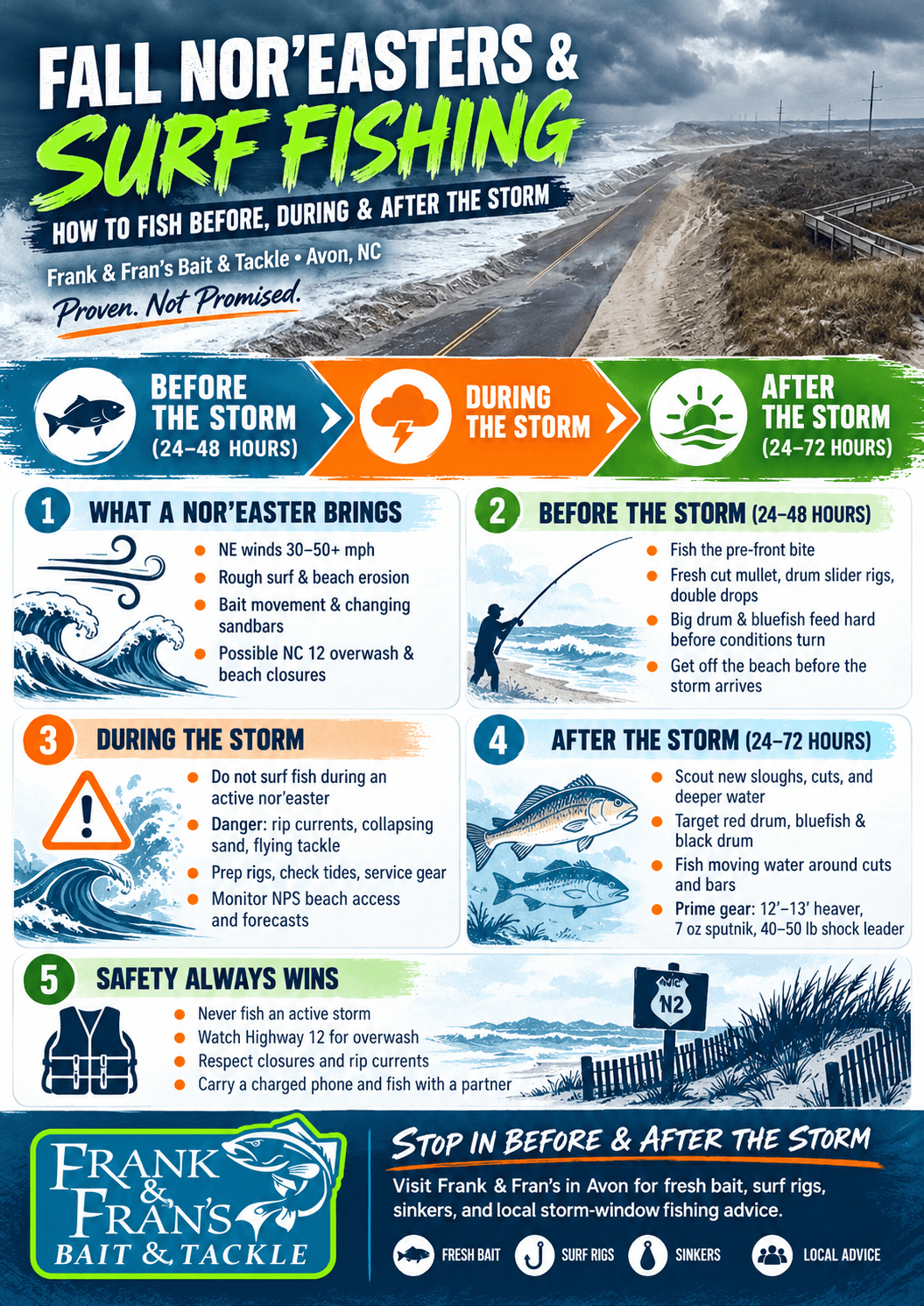
A nor'easter is a large storm system that develops along the Atlantic coast, typically moving up from the southeast and pushing winds from the northeast. On the Outer Banks, nor'easters bring:
- Strong, sustained winds from the north and northeast, often 30 to 50+ mph
- Heavy rain and sometimes coastal flooding
- Rough surf with big breakers and heavy wash
- Significant beach erosion and sandbar movement
- Water temperature drops and dramatic shifts in salinity near inlets
Nor'easters are different from tropical storms. They form from cold air masses meeting warmer ocean water, they often last longer than a tropical system, and they can hit even in the heart of winter. Fall and early winter are peak nor'easter season on the Outer Banks.
Why Nor'easters Matter for Fall Fishing
A nor'easter can be the best or the worst thing that happens to your trip. Here is why they matter.
They Reshape the Beach
Nor'easter waves rearrange the sandbars. A beach you fished last month will not look the same after a serious storm. New sloughs open. New cuts form. New points stick out where there was nothing before. For an angler who knows how to read the beach, a nor'easter is a reset button that often creates better fishing structure than existed before.
Our earlier guide on how to read a Hatteras Island beach covers how to identify sloughs, cuts, and feeding zones in detail. After a nor'easter, those features change, and anglers who scout the beach early have a big advantage.
They Move Bait
Nor'easter winds push bait toward the coast and stack it up near structure. Mullet, menhaden, finger mullet, and even smaller forage all concentrate when the surf is rough. The predators follow.
They Trigger Feeding
Dropping barometric pressure, water temperature changes, and heavy wave action all push fish to feed before and after a storm. Big drum, bluefish and others will key on this window.
They Can Close Beaches
Serious nor'easters can wash out roads, overwash ramps, flood sections of Highway 12, and force National Park Service to close ORV access until crews can regrade. Always check the Cape Hatteras National Seashore beach access map during and after storms.
Before the Storm: The Pre-Front Bite
The hours and days leading up to a nor'easter often produce excellent fishing. As barometric pressure drops, fish become more active. The water isn't blown out yet, access is still normal, and the beach is quiet because most casual anglers see the forecast and stay home.
What to Fish
Pre-storm windows favor bottom fishing with cut bait. Big drum, big bluefish, and the occasional striper all key in on the pre-front bite.
- A pre-tied drum slider rig with fresh cut mullet
- A double drop bottom rig for mixed-bag action
- A float rig like Chotty's Bluefish Rig for bluefish moving with the bait
For bait, the usual fall lineup. Fresh bait and frozen bait are both stocked at Frank & Fran's.
Pre-Storm Timing
Watch the forecast. The best fishing window is often the final 24 to 48 hours before a storm arrives, when the pressure has dropped but the wind and surf are still manageable. Fish early, fish hard, and get off the beach before conditions turn.
During the Storm: What You Can and Cannot Do
The honest answer: during a serious nor'easter, you should not be surf fishing. Safety first.
Reasons to stay off the beach:
- Rip currents are extreme
- Beach erosion can collapse the sand under you
- High winds make casting dangerous (hooks become projectiles)
- Lightning risk during the leading edge of some storms
- ORV access is often closed by NPS during active storms
- The surf is too rough for productive fishing anyway
What you can do during a storm:
- Scout maps and tide charts for the post-storm bite
- Service your reels and inspect rigs
- Tie leaders and prep tackle for the post-storm window
- Stop by Frank & Fran's for the latest on where the bite is expected to pop
- Watch water temperature and barometric pressure updates
- Rest. The post-storm bite is often an all-night affair.
After the Storm: Where the Best Fishing Happens
The 24 to 72 hours after a nor'easter passes often produce the best fishing of the fall. This is when prepared anglers get their shot. Here is how to make the most of it.
Scout the New Beach
Walk the beach at low tide as soon as access reopens. Nor'easters move sand aggressively. The slough you fished last week may not exist anymore. In its place, there may be a brand new one 30 yards closer to shore. Note:
- Where new sloughs and cuts formed
- Where sandbars shifted
- Where water is now deeper close to the beach
- Where bait is piled up (dead baitfish on the wrack line tells you where the water concentrated it)
Note what you see, then come back to fish those features on the next moving tide.
Fish Where the Current Set Up
Post-storm, strong currents often remain in cuts and outflow channels for days. Those currents concentrate bait, which concentrates predators. Fish the deep water on the seaward side of a cut, or the slough right behind a newly formed bar.
Target the Fish That Love Rough Water
- Red drum feed aggressively after nor'easters. The combination of churned-up bait, cooler water, and dropping pressure is drum heaven. Drum slider rigs are the rigs of choice.
- Big bluefish push into the beach to feed on stunned baitfish. A One More Cast Chotty Rig with fresh mullet with get them biting.
- Black drum key on crabs and crustaceans exposed by the storm. A Psycho's Adam's Drum Rig with fresh shrimp is deadly in the post-storm bite.
Gear That Handles Post-Storm Conditions
Post-storm surf is still rough. You need gear that can hold bottom and handle heavy fish in strong current.
- 12' or 13' heaver for distance and backbone
- 7 oz Sinker Guy Sputnik Sinker to anchor bait in moving water
- Heavy shock leader (40 to 50 lb mono)
- Durable rigs that can take abuse. The full surf fishing rig selection at Frank & Fran's covers heavy conditions.
Fish the First Clear Window
The first 12 to 24 hours when the wind drops and the surf starts to clean up is prime time. Water is still stirred up, bait is still concentrated, and predators are still hunting hard.
Reading the Forecast
A few things to watch when a nor'easter is in the forecast:
- Wind direction. True nor'easter winds come from the northeast. Winds shifting west and south typically means the storm is pulling away.
- Wave period. Longer wave periods (10+ seconds) mean more energetic swells and more beach erosion. Shorter periods (6-8 seconds) are typical of a passing system that will clean up faster.
- Water temperature. Nor'easters can drop ocean temperature 5 to 10 degrees in a day. Big temperature drops trigger drum feeding.
- Pressure trends. Rising pressure after a storm often marks the start of the post-storm bite window.
Several apps and sites make this easy to track. Buoy data from NDBC (National Data Buoy Center), the National Weather Service marine forecast, and the daily Frank & Fran's fishing report all help you time your trip.
Safety Always Wins
A fish is never worth getting hurt or stranded. A few rules every Hatteras Island angler should follow during storm season:
- Never fish during an active nor'easter. The post-storm bite is better than fishing a storm. Wait it out.
- Monitor NPS beach closures. Driving through a closure costs you your permit.
- Watch for overwash on Highway 12. Some stretches become impassable during and after storms.
- Respect rip currents. They can be extreme for days after a storm passes.
- Carry a fully charged phone and know the ramp exit nearest you.
- Fish with a partner. Especially on an unfamiliar post-storm beach where structure has changed.
Stop In Before and After the Storm
Frank & Fran's has been outfitting Hatteras Island anglers through nor'easter seasons since 1988. The staff fishes the pre-storm and post-storm windows every fall. When a storm is in the forecast, the shop is one of the best places on the island to get a read on timing, which beaches to hit, what the water is doing, and what bait and rigs will work when the surf settles.
Stop into the Avon shop for fresh bait, heavy sputnik sinkers, pre-tied drum rigs, and a quick rundown of what to expect in the storm window. Browse the full surf fishing tackle selection online to stock up before the next system rolls in.
Fall nor'easters are a part of fishing Hatteras Island. The anglers who learn to work them (not fight them) catch more and bigger fish than the ones who pack up at the first forecast. See you after the storm.