

Chasing Old Drum on Hatteras Island: Fall's Biggest Fish and How to Land One
Posted by Heather James on 11th Nov 2026
Chasing Old Drum on Hatteras Island: Fall's Biggest Fish and How to Land One
Every surf angler who fishes Hatteras Island long enough starts thinking about old drum. The big ones. The 40, 45, 50-inch fish that take line like you set the hook into the back of a car. The Word Record Replica on the wall at the shop that was caught on Avon Beach and weighed in by one of the original shop owners, Fran. The reason trucks line up at Cape Point in November with headlamps still on at 2 in the morning.
Old drum are the biggest fish you can realistically catch from a Hatteras Island beach. They are also one of the hardest. Patience, gear, timing, and location all matter. This guide walks through what an old drum actually is, when and where to find them, and how to put yourself in position to land one this fall.
What Is an Old Drum?
Red drum (also called redfish or channel bass) live in three size classes locally:
- Puppy drum. Under 30 inches. Slot-size and under, catchable from almost any beach, the bread and butter of OBX surf fishing.
- Yearling drum. Roughly 30 to 40 inches. Growing fish that start showing up in heavier numbers during fall and winter.
- Old drum (big drum). Over 40 inches. Trophy fish that qualify for North Carolina citations.
Old drum are not just big. They are old. A 50-inch drum is likely 15 to 20 years old. The biggest drum ever recorded weighed just over 94 pounds and was caught off Avon Beach on Hatteras Island in 1984. That record still stands.
These are breeding-stock fish that spawn in late summer and early fall near inlet mouths. After spawning, they move along the beach feeding hard before offshore winter migration. That post-spawn fall feeding window is what the Hatteras Island old drum season is built around.
When the Old Drum Run Hits
The fall old drum run on Hatteras Island typically runs from late September through early December, with peak action in October and November. Timing shifts year to year based on water temperature, bait movement, and weather patterns.
What triggers the run:
- Water temperatures dropping from the mid-70s into the 60s
- Nor'easters that stir the surf and push bait
- Big schools of mullet, menhaden, and spot pushing along the coast
- Shortening daylight that cues migration behavior
Signs the run is on:
- Reports of 40+ inch fish from Avon Pier, Cape Point, or Hatteras beaches
- Birds working bait pods tight to the beach
- Serious drum anglers starting to show up at ramps 43, 44, and 55 before dawn
- Trucks lined up at Cape Point from New Jersey, Pennsylvania, Virginia, and farther
Check the daily Frank & Fran's fishing report once October arrives. The report tracks the run closely as it develops.
Where to Find Old Drum
Cape Point (Buxton)
The most famous old drum beach on the East Coast. The spot where the Labrador Current meets the Gulf Stream, where sandbars curl out from the tip, and where the biggest fish of the fall typically get caught. Access via Ramps 43, 44, and 49.
Cape Point is a serious beach. Crowded in peak run weeks, long walks when access is restricted, demanding conditions when the surf is up. But when the slot on the bar lights up, it produces fish nowhere else on the island can match. Our Cape Point fishing guide covers the detail.
Ramp 55 and Hatteras Village
Southern Hatteras Island access with less pressure than the Point. Big drum push through here consistently in October and November. A good option if you want fall drum without the Point's crowds.
Avon Pier
Avon Pier produces big drum during the spring and fall runs. The pier gives you access to deeper water and strong currents without the long beach walks the Point requires. Unfortunately, the end of the Pier was damaged in September 2026 so the fall drum fishing season on the pier was cut short. Hopefully, the pier will be rebuilt for the 2027 season.
Avon and Buxton Beaches
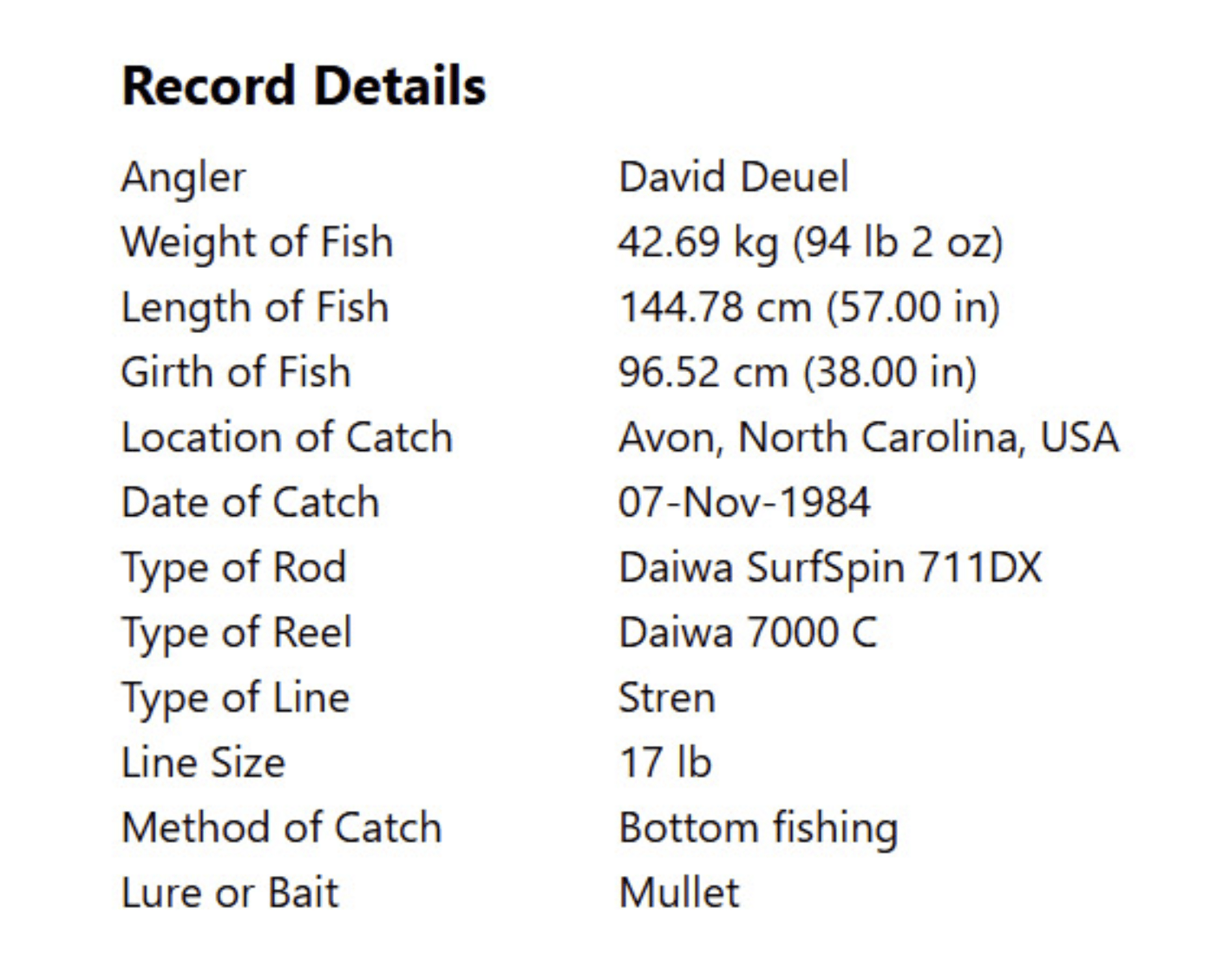
The stretch between Avon and Cape Point produces big drum through the run, especially during stormy weather when fish push closer to the beach. Walk-on or ORV access, with less pressure than the Point. In 1984, David Duell landed the word record red drum, which you can see hanging in our shop in Avon.
Here are the official statistics of the catch - note that it was landed using 17lb mono.
The Northern Beaches
Rodanthe, Waves, and Salvo produce old drum during the heart of the run, especially after nor'easters push through. Shorter walks from the ramps and smaller crowds than the Point.
Gear for Old Drum
Old drum are not caught on casual tackle. These fish break lines, bend hooks, and strip reels. Your gear needs to be built for the fight.
Rods
A 12' or 13' heaver is the standard. The length gets heavy bait past the first sandbar. The backbone handles 40+ inch fish in current.
Local options:
- Ninja Tackle 13'3" Dagger Bomber. Built for distance, heavy bait, and rough surf. One of the serious drum rods on the island.
- Nick's Custom Rods CTS 1305 Conventional. 13' hand-built conventional for anglers who prefer long-distance conventional casting.
- Nick's Custom Rods CTS 1205 Spinning. 12' custom spinning rod rated 6-10 oz.
Browse the full surf rod selection for additional options.
Reels
A 6000 to 10000 size spinning reel or a matched conventional reel is the right size for old drum work. Smooth, high-capacity drag matters. These fish make long first runs.
Proven reel options among local drum anglers include the Penn Battle, Daiwa BG, and Quantum Benchmark for spinning. For conventional, Penn Squall, Penn Fathom and Akios F-16 are the most popular and have landed many old drum!
Line and Shock Leader
20 lb monofilament, with a 40 or 50lb shock leader between your mainline and the rig. The shock leader absorbs the force of casting heavy weight and bait, and protects against the drum's sharp gill plates during the fight.
Berkley ProSpec Monofilament and Sufix Tritanium handle the abrasion and shock of Hatteras Island surf conditions well. Browse the full line selection.
Rigs
The drum slider rig (fish finder rig) with a circle hook is the standard. Circle hooks are required by North Carolina regulation when fishing natural bait for red drum, and they hook the fish in the corner of the mouth for safer catch and release of these important breeding fish.
- F&F Circle Hook Drum Slider Rig (2 Pack). The Frank & Fran's house drum rig, tied for Hatteras Island conditions.
Carry extras. Bluefish and sharks bite off drum rigs during a run. Being caught with one rig when the bite is on costs you fish.
Browse the full rig selection for drum, shark, and bluefish options.
Sinkers
8 oz. pyramid sinkers ranging are used for old drum when fishing Cape Point. We refer to that as combat fishing because when the bite is on, anglers are fishing shoulder to shoulder. Everyone uses the same weight so that they drift at the same rate with the current which helps prevent getting tangled with other anglers.
When fishing other ramps, pyramid sinkers and frog tongue sinkers work well. Old drum often get caught in strong current near the bar. If you find that standard pyramid and frog tongue sinkers are drifting switch to a sputnik. You want sinkers that lock into the sand and keep your bait pinned in the strike zone.
Sinker Guy Sputnik Sinkers in 7 oz are the local go-to for old drum conditions. Carry a few 6-ounce options for calmer days.
Bait
The fall old drum menu:
- Fresh mullet (heads and chunks). The most reliable fall drum bait, period.
- Fresh spot when they're running. Oily and bloody. Big drum love it.
- Bunker (menhaden) cut chunks. Strong scent trail that pulls drum from a distance.
- Tuna belly. A specialty bait that big drum sometimes key on when they're refusing other offerings. We call it drum candy!
- Blue crab halves or quarters. Hooked through the shell. Deadly for the biggest fish.
Frank & Fran's stocks fresh bait daily through the run, with frozen bait as a backup. Stop in early during peak weeks. Fresh mullet moves fast.
Tactics That Catch Old Drum
DON'T LET A LITTLE RAIN OR WIND SCARE YOU. The drum like it rough so put on your big boy pants and by that I mean waders, boots and rain gear and fish on!
Fish the tide, especially the change. The last two hours of an incoming tide through the first hour of the outgoing produce most of the trophy fish. Slack low can be surprising too when the current sets up right.
Fish low light and after dark. A huge percentage of the biggest old drum caught on Hatteras Island every year hit after sunset. Dusk through midnight is the prime window. If you're not willing to night fish, you're missing the best bite.
Cast to the trough, not past it. Beginners overcast. Old drum feed in the trough between the bar and the beach, not two miles offshore. Get your bait in the right water, not the maximum distance you can throw.
Watch the water, not just your rod tip. When old drum are in close, you'll often see them. Rolls on the surface. V-wakes. Bait getting pushed. Pay attention.
Keep bait fresh. Old drum feed on scent as much as sight. Refresh bait every 20 to 30 minutes if you're not getting hit.
Set the drag correctly. First run of a 45-inch drum will test your drag. Set it tight enough to turn the fish but loose enough to let line out without snapping the leader.
Let the circle hook work. When a drum takes, don't rip-set the hook. Let the line come tight and the circle hook will slide into the corner of the mouth on its own.
Fight the fish, don't rush it. Big drum take time. Expect 15 to 30 minutes on a slot or yearling, longer on a true citation. Pump and reel, keep steady pressure, and let the drag do its job.
Handling and Release
Old drum are the breeding stock of North Carolina's red drum population. Every one of them matters. North Carolina regulations:
- Slot limit: 18 to 27 inches total length
- Bag limit: 1 fish per person per day
Any drum over 27 inches must be released. For a 40+ inch citation fish, that release matters enormously.
How to release an old drum safely:
- Keep the fish in the water as much as possible. These fish are not built to be lifted onto dry sand.
- Support the fish horizontally. Never hold a big drum by the tail or lift it vertically. It can damage internal organs.
- Use pliers to remove the hook. If deeply hooked, cut the leader as close to the hook as possible.
- Walk the fish forward in the surf until it swims off on its own. If it tries to swim, let it go. If it rolls, keep walking.
- Measure, photograph quickly, and release. Carry a tape measure in your sand spike or truck.
North Carolina Marine Fisheries citation program recognizes red drum of 40 inches or more. Documentation is straightforward and the citation is a great memento. Full details available through NC Division of Marine Fisheries. Confirm current rules before you fish.
What to Expect in Peak Season
Peak run weeks on Cape Point can get crowded. Really crowded. A few things to know:
- Expect company at every slot
- Expect limited bait availability when conditions are rough. Stop at Frank & Fran's early.
- Expect fishing culture etiquette. Give regulars space. Don't crowd someone's rod. Thank people who help you land a big fish.
- Work together, bob and weave over and under other angler's lines
- Don't fish with braided line!
The culture of old drum fishing at the Point is one of the special things about Hatteras Island. Fishing it respectfully makes you part of it.
Stop In Before You Head Out
Frank & Fran's has been outfitting Hatteras Island old drum anglers since 1988. During the fall run, the shop is one of the busiest places on the island. Bait comes in fresh daily, the rig wall is fully stocked, and the staff fishes the run themselves every year. They know what's biting, where, and when.
Stop into the Avon shop for fresh bait, pre-tied drum slider rigs, sputnik sinkers, and a current read on which beach is producing. Browse the full surf fishing tackle selection online to prep before your trip.
An old drum is the fish you plan a year for. Get the gear right. Get the rigs stocked. Get your permit sorted. Pick your tide window. Then put a bait in the right slot and wait. The hit, when it comes, is unmistakable. See you on the beach.