
Cape Point Fishing Guide: How to Fish One of the Most Famous Spots on the East Coast
Posted by Frank & Fran's Crew on 20th Aug 2026
Ready to fish the legendary Cape Point? Gear up, find the hotspots, master the currents, and get ready to fish on one of America's most famous beaches!
If you ask ten surf anglers on the East Coast to name the most famous piece of fishing beach on the coast, nine of them will say Cape Point. It's the reason people put "44" stickers on their tailgates. It's where the trucks line up at 4 AM in November. It's where the fall drum run has produced trophy fish for generations of Hatteras Island anglers.
But Cape Point is not automatic. The bar shifts. The currents change. Closures come and go. And the difference between a great day at the Point and a long walk back to the truck often comes down to knowing how to fish it.
This guide walks through why Cape Point is special, how to access it, what to bring, and how to make the most of a trip there.
Why Cape Point Is Famous
Cape Point sits at the southern tip of Buxton on Hatteras Island, right where the coastline makes its famous 90-degree bend. It's the spot where the cold Labrador Current flowing south meets the warm Gulf Stream pushing north. That collision is what makes the fishing special.
The currents:
- Concentrate bait in ways that don't happen on straight beaches
- Create the sandbars, points, and cuts that hold predators
- Bring migratory species close enough to catch from shore
- Support one of the most diverse fisheries on the East Coast
A single fall day at Cape Point can produce red drum, striped bass, bluefish, and Spanish mackerel from the same slot on the bar. That's rare anywhere else. It's normal here.
How to Access Cape Point
You can walk to the Point, but almost nobody does. It's a long walk in soft sand with a heavy load of gear. The vast majority of Cape Point anglers drive.
The ORV Permit
You need a Cape Hatteras National Seashore Off-Road Vehicle (ORV) permit to drive on the beach. Permits are sold only through Recreation.gov. Current pricing as of August 2026:
- $50 for 10 days
- $120 for an annual permit valid one year from purchase
Buy the permit on-line before your trip. There is no in-park purchase option. The permit needs to be visible on the driver-side dashboard when you're on the sand.
Self-certification cards for beach driving safety are available at Frank & Fran's if you don't have access to a printer.
The Ramps
Cape Point is accessed through a small handful of ORV ramps, all inside Cape Hatteras National Seashore:
- Ramp 43. Just north of the Cape Hatteras Lighthouse. Popular, wide beach, and one of the most-used ramps on the island.
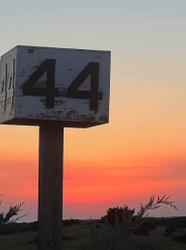
- Ramp 44. The famous one. It's the direct route to Cape Point when the corridor is open.
Closures are real, and they matter. During shorebird and sea turtle nesting seasons (roughly spring through mid-summer), stretches around Cape Point close to protect nesting birds and turtle nests. Ramp 44's route south is frequently shut even when the ramp itself is open. Check the Cape Hatteras National Seashore beach access map the morning of your trip. Don't trust yesterday's information.
Beach Driving Basics
- Speed limit is 15 mph on the beach. It's enforced.
- Air down your tires at the ramp to around 18 - 20 PSI. There is an air pump on the north side of the Frank & Fran’s building so you can air up before heading home.
- Stay in the established corridor between the high-tide line and the dunes. Driving over dunes or closure ropes gets you ticketed.
- Carry the required gear: shovel, tow strap, jack, and low-pressure tire gauge.
- Nighttime beach driving requires a valid ORV permit and follows current NPS rules, which shift seasonally. Confirm at the ramp before driving at night.
What You Can Catch at Cape Point
Cape Point produces year-round, but the species mix shifts with the seasons.
Spring (March through May)
- Sea mullet (whiting)
- Bluefish, including some larger gator blues
- Puppy drum, yearling drum and old (big) drum
- Blowtoads
- Early Spanish mackerel
Summer (June through August)
- Pompano (peak season)
- Spanish mackerel
- Bluefish
- Sea mullet
- Sheepshead and black drum occasionally
- The occasional cobia and tarpon
Fall (September through November)
- Red drum runs, including large citation fish
- Spanish mackerel
- Bluefish, including big chopper blues
- Sea mullet
Fall is the marquee season at Cape Point. The red drum run typically peaks in October and November, and the beach fills with trucks from every state on the coast.
Winter (December through February)
- Occasional bluefish and drum
- Blowtoads
- Slower fishing overall, but rewarding for anglers who show up
Gear for Cape Point
Cape Point is a rougher, deeper fishery than most Hatteras Island beaches. Currents are stronger. Waves are bigger. Fish are larger. Your gear needs to match.
Rods
For general Cape Point fishing, a 10' to 12' medium-heavy spinning rod covers most conditions. For fall drum, most locals fish a 12' or 13' heaver. The extra length gets your bait past the bar and gives you the backbone to fight big drum in current.
Options at Frank & Fran's include:
- Ninja Tackle 13'3" Dagger Bomber. A serious drum rod built for distance, heavy bait, and rough surf.
- Nick's Custom Rods CTS 1205 Spinning. 12' custom-built rod rated 6-10 oz. Handmade quality for anglers who fish the Point regularly.
- Nick's Custom Rods CTS 1305 Conventional. 13' conventional for distance casting with heavy sinkers.
The full surf rod selection covers a range from beginner to serious drum angler setups.
Reels
Pair a spinning rod with a 6000 to 8000 size saltwater reel. Popular options include Penn Battle, Daiwa BG, and Quantum Benchmark. For conventional heavers, use a matched conventional reel such as a Penn Fathom 12 or 15, Daiwa Saltist 30H or an Akios F-16.
Line and Leader
For fall drum and other big Cape Point fish, spool with 20 lb mono and a 40 or 50lb shock leader connected to your main line. Sufix Tritanium and Berkley ProSpec Monofilament are proven choices for the abrasion resistance you need in Cape Point conditions. Braid is frowned upon as it can cut other angler’s line during big drum runs.
Browse the full line and leader selection for shock leaders and specialty lines or stop in at Frank & Fran’s and we can get you spooled up!
Rigs
The fish finder rig (drum slider) with a circle hook is the standard Cape Point drum setup. The F&F Circle Hook Drum Slider Rig (2 Pack) is tied for these exact conditions.
For mixed-bag days, a double drop bottom rig still puts fish on the beach for smaller species. For bluefish blitzes, keep a float rig and Hopkins spoon ready.
Sinkers
Cape Point currents can rip. You need weight that holds bottom. Sinker Guy Sputnik Sinkers are the local standard because the wire arms lock into the sand and stop your bait from drifting out of the strike zone. Six to eight ounces will handle most conditions, but keep 10-ounce options for the heavier days. However, if you are fishing the “conga line” during a big drum run, stick with an 8 oz pyramid or frog tongue so your line drifts at the same speed as anglers.
Bait
The fall drum classics:
- Fresh mullet (cut heads or chunks)
- Fresh spot or bunker (menhaden)
- Tuna belly
- Blue crab for larger fish holding tight to the bar
Frank & Fran's stocks fresh bait and frozen bait daily based on what's available and what's biting. The staff will point you to what's producing that morning.
Tactics That Work at Cape Point
Fish the change of the tide. The last two hours of an incoming tide through the first hour of the outgoing tide produce most of the trophy drum. Slack low can be surprisingly productive too when the current sets up right.
Read the bar. Cape Point is defined by a shifting sandbar that curls out from the tip. The productive water is usually the slough behind the bar or the deep water where the bar breaks. Walk the beach at low tide and note where the bar shows.
Cast to the trough, not past it. Beginners overcast. Big drum feed in the trough between the bar and the beach, not two miles offshore. Get your bait in the right water, not the maximum distance you can throw.
Get there early and stay late. In fall, the parking situation at Cape Point on weekends is real. Sunrise or before. If you show up at 10 AM in November, you're parking a mile from the tip and walking. Most of the big drum runs occur around dusk and into the night so don’t plan on hitting the bed too early!
Pack for the beach. Weather at Cape Point changes fast. Bring layers, water, food, and enough gear to fish through a shift you didn't expect.
Respect the regulars. The Point has a culture. Fishermen work slots that they've been fishing for decades. Give people space, ask questions politely, and don't crowd anyone's rod. Cape Point rewards patience and manners.
Safety and Etiquette
Cape Point is a wild beach. A few things worth taking seriously:
- Rip currents are common. Don't wade past your comfort zone.
- The current can pull anything. Secure your gear, your cooler, and your dog. I remember the first time I went to Cape Point with Ginger; I let her bucket with her good pliers get swept away so don't be like me!
- Turtle and bird closures are non-negotiable. Violations cost your permit.
- Trash goes home with you. Cape Hatteras National Seashore has no trash service on the beach.
- Fires are only allowed with permits and only during authorized windows. Confirm with NPS before you burn anything.
Stop In Before You Head to the Point
Frank & Fran's has been outfitting Cape Point anglers since 1988. The shop is 20 minutes north of Ramp 44, and the staff fishes the Point through every season. They know what the bar looks like this week, what's biting, and what bait is fresh that morning.
Stop into the Avon shop for rigs, bait, sinkers, and a quick rundown of what's happening at the Point before you drive out. Or check the daily fishing report online for updates.
Cape Point earns its reputation. It's not always easy. It's not always crowded. But when you time it right and put a bait in the right slot, you're fishing the most famous piece of surf beach on the East Coast. See you at the Point!